Original illustration · The Backstory Dept.
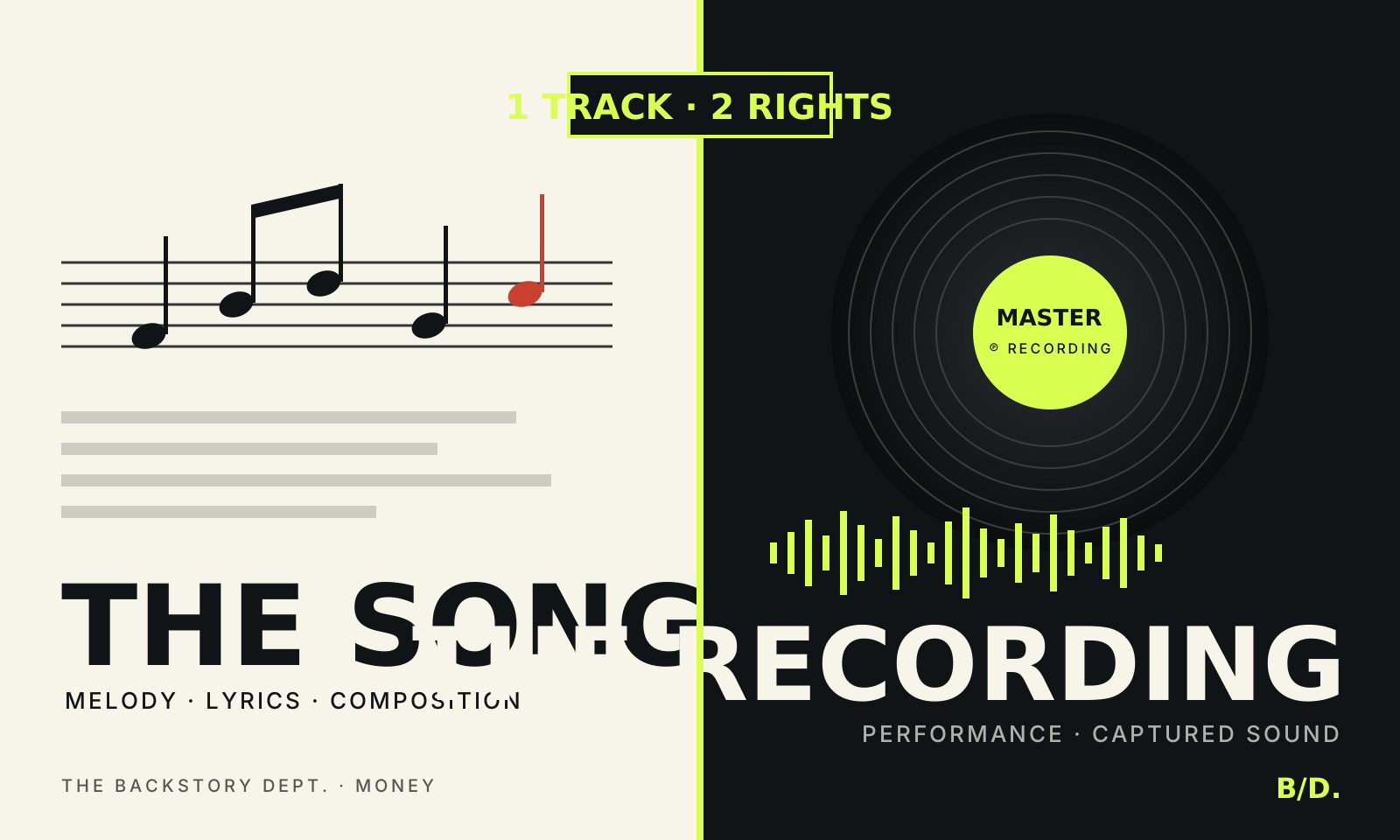
You can write a song in one room, record it in another, upload it from your laptop and watch it reach listeners halfway around the world. To a fan, it is one track. Behind the release, copyright law often recognizes two different creations: the musical work and the sound recording. Confusing them can mean misunderstanding what you own, what you licensed and how the money reaches you.
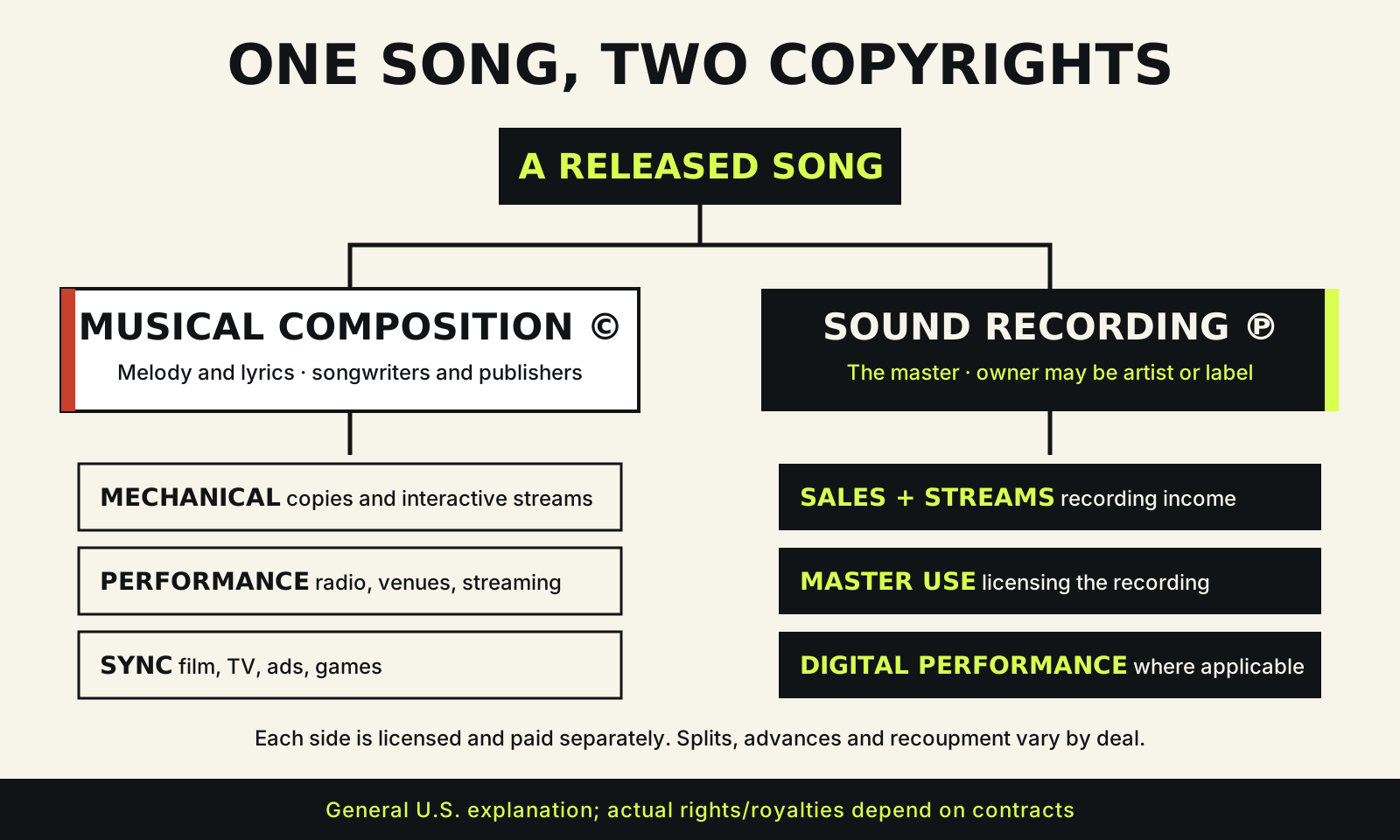
The U.S. Copyright Office makes the distinction plainly. The musical work is the underlying composition, including music and lyrics. The sound recording is a particular recorded performance of that composition. They can be owned by the same person, shared among collaborators or controlled under different contracts.
The song is not the recording
Imagine a songwriter composes a melody and verses, then records the song with a producer. The composition is the work embodied in the music and words. The master is the specific audio recording that gets released. If another performer later makes a separate recording of that composition with the necessary permissions, that creates a different master, not a new ownership claim to the original song itself.
 View full-size illustration
One song can involve two different copyrights and separate royalty streams. Actual rights and payment depend on the contract.
Original illustration · The Backstory Dept.
There is no automatic rule that a rapper loses the song because someone else pays to record it. Ownership and licensing depend on authorship, lawful agreements and the work involved. The Copyright Office also explains that copyright protection generally begins when an original work is fixed in a tangible form. Registration is a separate step that offers important legal advantages, especially when enforcement becomes necessary.
Why a record deal can change the answer
Recording agreements often concern the rights to particular masters, their exploitation and the money earned from them. Some arrangements transfer ownership; others license recordings for a term. The exact contract matters. A headline about a major advance cannot answer who controls the masters, how long the label can exploit them, or which uses require the artist's approval.
Publishing deals concern musical works rather than the particular audio master. A songwriter may have an interest in the composition even when a label controls the recording. But collaborators and publishing agreements can divide those interests, too. A producer who contributes protectable musical authorship may have a composition claim; someone who only provides a service may not. The credit and payment arrangements should be documented instead of assumed.
Where the different royalties go
An on-demand stream is not one simple payment that gets handed to an artist. Depending on the platform, territory, license and contracts, money may flow through different routes for the master and the composition.
For the recording side, artists or labels generally receive master-related revenue through distribution and licensing arrangements, then account to collaborators according to their agreements. For the composition, there can be public-performance royalties, mechanical royalties and other payments. The U.S. Music Modernization Act established a system in which The Mechanical Licensing Collective administers qualifying U.S. digital audio mechanical royalties for musical works. The MLC does not replace performing-rights organizations.
SoundExchange plays a different role in the U.S. system. It administers certain digital performance royalties for sound recordings, including eligible noninteractive services, and provides tools for artists and rights owners to claim recordings and monitor payments. That does not mean every Spotify or other interactive stream automatically generates the same type of SoundExchange payment. Service type and licensing arrangements make a difference.
The split sheet is not busywork
When two or more writers build a song, the moment to discuss shares is before everybody forgets what was agreed. A written split sheet can record who contributed to the composition and the ownership percentages the writers agree on. Recording credits and producer agreements should document master-related contributions and compensation as well. Those documents do not replace a lawyer, but clear records can prevent disputes later.
For artists who record themselves, independent ownership can create an opportunity to control both layers. It can also make them responsible for accurate metadata, registrations, licenses, collaborators' payments and the administration of the catalog. Owning rights is only part of the job. Being able to identify and collect the money attached to them matters, too.
Before the next release
An artist preparing a song should be able to answer a few questions in ordinary language. Who wrote the music and lyrics? Who owns or controls the finished recording? Are any samples or outside compositions involved? What did each collaborator agree to receive? Who is registering the song and the master, and who is collecting royalties through each applicable channel?
A release can travel internationally in seconds. The rights underneath it deserve more attention than the time it takes to click Upload. Two copyright categories do not always mean two different owners, and no single royalty service collects every payment. Understanding that distinction makes it easier for creators to recognize a fair deal, protect their work and ask better questions before signing one.
This explainer describes U.S. copyright and music-royalty concepts in general terms. It is not legal or financial advice. Individual contracts and international rules can differ.
Sources
- [1]US Copyright Office: What musicians should know — U.S. Copyright Office
Supports: Separate compositions and sound recordings; fixation and registration
Verified by our desk
- [2]U.S. Copyright Office: Music Modernization Act — U.S. Copyright Office
Supports: MLC role, qualifying U.S. digital mechanical licensing and producer provisions
Verified by our desk
- [3]The MLC: How it works — Mechanical Licensing Collective
Supports: Digital musical work mechanical royalty collection and songwriter payments
Verified by our desk
- [4]SoundExchange: What we do — SoundExchange
Supports: Sound recording digital performance royalties, claims, artist and rights owner services
Verified by our desk
- [5]US Copyright Office: Albums and registrations FAQ — U.S. Copyright Office
Supports: Separate sound recording and musical work copyright registrations
Verified by our desk