Who Told Black Louisville's Story? Inside the Leader and Defender
Long before today's feeds, the Louisville Leader and Louisville Defender documented Black civic life, businesses and the struggle for equal treatment. Their archives remain essential reading.
By The Backstory Dept.
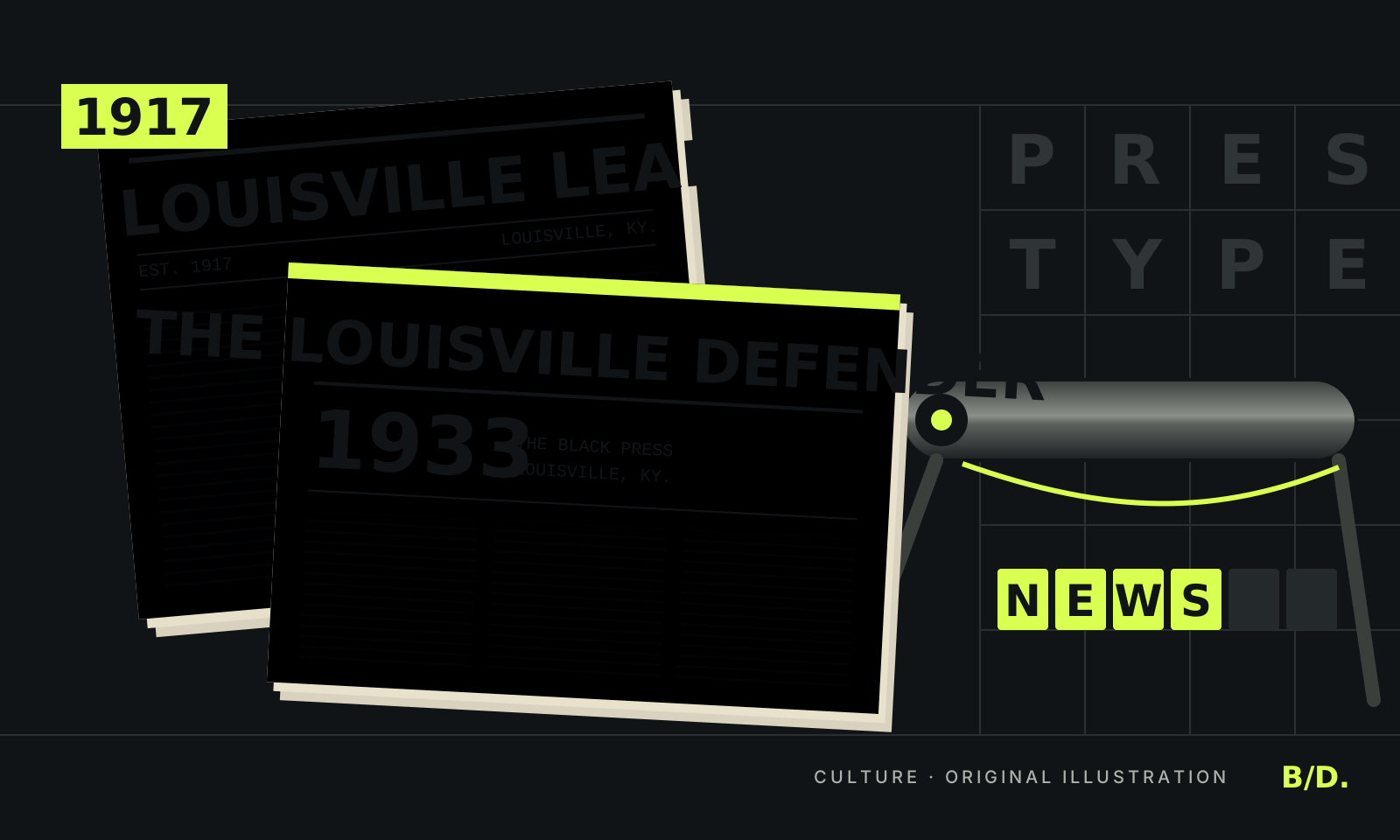
Original illustration · The Backstory Dept.
A surviving issue of the Louisville Leader dated November 10, 1917, sits in the University of Louisville's digital collections. More than a century later, its pages invite readers into a city where Black residents built their own places to report news, celebrate neighbors and demand political change. What looks like an old newspaper is also evidence of who had to insist on being heard.
Two publications help explain that history: the Louisville Leader, which began in 1917, and the Louisville Defender, founded in 1933. Their pages documented politics, education, work, community achievement and conflict through the eyes of Black Louisville. The papers were not just witnesses to history. They were part of how their readers argued about it and acted on it.
A newspaper that asked its readers to participate
The University of Louisville's archives identify I. Willis Cole as the founder of the Louisville Leader in 1917. The weekly reported local, national and international news, with sustained attention to the legal and political concerns of African Americans in Kentucky. Its banner described the publication as 'Militant but Stable,' a compact expression of the balance between demanding change and building lasting institutions.
The Leader pushed political participation, including voter registration, as a way for Black residents to claim greater influence. That mattered in a region where political rights and equal access to public institutions faced substantial barriers. Its reporting was not simply a parallel account of the news. It helped articulate what Black Louisville wanted from the city around it.
The paper's surviving run provides material that later histories cannot always supply: the public language of a community speaking in its own moment. According to the university, available copies from the 1917 to 1950 period were eventually microfilmed and then digitized. Readers can now explore those pages as historical sources rather than rely entirely on someone else's memory of the period.
The Defender made a different kind of archive
The Louisville Defender began publication in 1933. By 1936, Frank L. Stanley Sr. was leading the paper, beginning decades of work as an editor and publisher. University of Louisville archival records and the Kentucky Commission on Human Rights identify Stanley as a central figure in Black journalism and civil rights organizing in Kentucky. The Defender followed segregation, public policy and local achievement through the experiences of Black Louisvillians.
University of Louisville archival exhibits use Defender clippings to illuminate how Louisville debated schooling and policing. Reporting on integration, public policy and unequal treatment made these issues visible in a local frame. The same publication carried the names of neighbors, businesses, students and institutions whose achievements might otherwise have gone unrecorded in a central public archive.
This is a reason to treat a local newspaper as more than background reading. A story about an organization can tell a later researcher who organized a meeting, what demands were made and how participants described the stakes. Advertisements can show which businesses served the neighborhood. The small notices may be as revealing as the biggest headlines.
Journalism as community infrastructure
The Defender's influence extended beyond printing pages. Its publisher Frank L. Stanley Sr. helped establish the National Newspaper Publishers Association and worked in civil rights advocacy, according to University of Louisville archives and Kentucky's Commission on Human Rights. His editorial column, 'Being Frank,' became nationally syndicated. The university's collection of his papers places the newspaper at the center of a network of correspondence, public debate and local organizing.
A Black-owned or Black-focused publication could choose to assign importance differently from a newspaper written primarily for white readers. That editorial choice mattered. The way a story is covered, who gets quoted, and whether a development is reported at all can shape how a community later appears in the historical record.
None of that requires pretending that the papers spoke for every Black resident or held identical views over time. Communities contain disagreements. A surviving newspaper preserves those debates along with the solidarity. It is valuable precisely because it is a contemporary source, subject to its own editorial choices, not a perfectly neutral window.
Where the pages can be read today
Preservation makes this history accessible again. The University of Louisville's digital collections include available issues of the Leader from 1917 through 1950. Louisville Free Public Library's Black Newspaper Collection provides library-card access to searchable historical issues of the Defender, including its 1951 to 2010 archive. Readers can follow an issue, a person's name or a neighborhood story through the pages where it first appeared.
Those collections support the work of families tracing relatives, students studying segregation and researchers asking what Black businesses and organizations were doing across generations. They also create an opportunity for contemporary readers to compare historical coverage with the way Louisville's neighborhoods are described now.
There is an important difference between telling people that Black Louisville had a voice and putting its surviving pages in front of them. The Leader and the Defender help do the latter. Their archives remind us that the people who built a city's institutions also documented them, argued for them and left behind a record that deserves to be read.
Sources
- [1]University of Louisville: African American newspapers — University of Louisville Libraries
Supports: I. Willis Cole, Louisville Leader founding in 1917, archives, editorial coverage
Verified by our desk
- [2]UofL: Frank L. Stanley Sr. and the Louisville Defender — University of Louisville Libraries
Supports: Defender and Stanley archival records, policing exhibits and Black journalism
Verified by our desk
- [3]Kentucky Commission on Human Rights: Frank L. Stanley Sr. — Kentucky Commission on Human Rights
Supports: Publisher Frank L. Stanley Sr. and his role in civil-rights advocacy
Verified by our desk
- [4]Library of Congress: Louisville Defender catalog — Library of Congress
Supports: Weekly newspaper publication and catalog chronology
Verified by our desk
- [5]LFPL Black Newspaper Collection — Louisville Free Public Library
Supports: Available archive access and newspaper coverage
Verified by our desk
- [6]Louisville Public Media: LFPL archives access — Louisville Public Media
Supports: 2023 library program and searchable Defender issues 1951-2010
Verified by our desk
- [7]University of Louisville digital Leader issues — University of Louisville Digital Collections
Supports: Digital facsimiles include The Louisville Leader issue dated November 10, 1917
Verified by our desk
- [8]Frank L. Stanley Sr. papers — University of Louisville Libraries
Supports: Archival collection details publisher's career, name suffix, and the Louisville Defender papers
Verified by our desk
More from Culture
The Sisters Who Organized Black Louisville Before the Vote
Georgia and Alice Nugent helped turn a Louisville home into a meeting place for Black women's organizing, education and voting rights. Their work expanded far beyond one address.

Louisville early voting starts Oct. 29: Find a location near you
Jefferson County voters can cast a ballot October 29–31 at any designated early voting center. Here's when the sites open, where to start looking and what to check before you go.
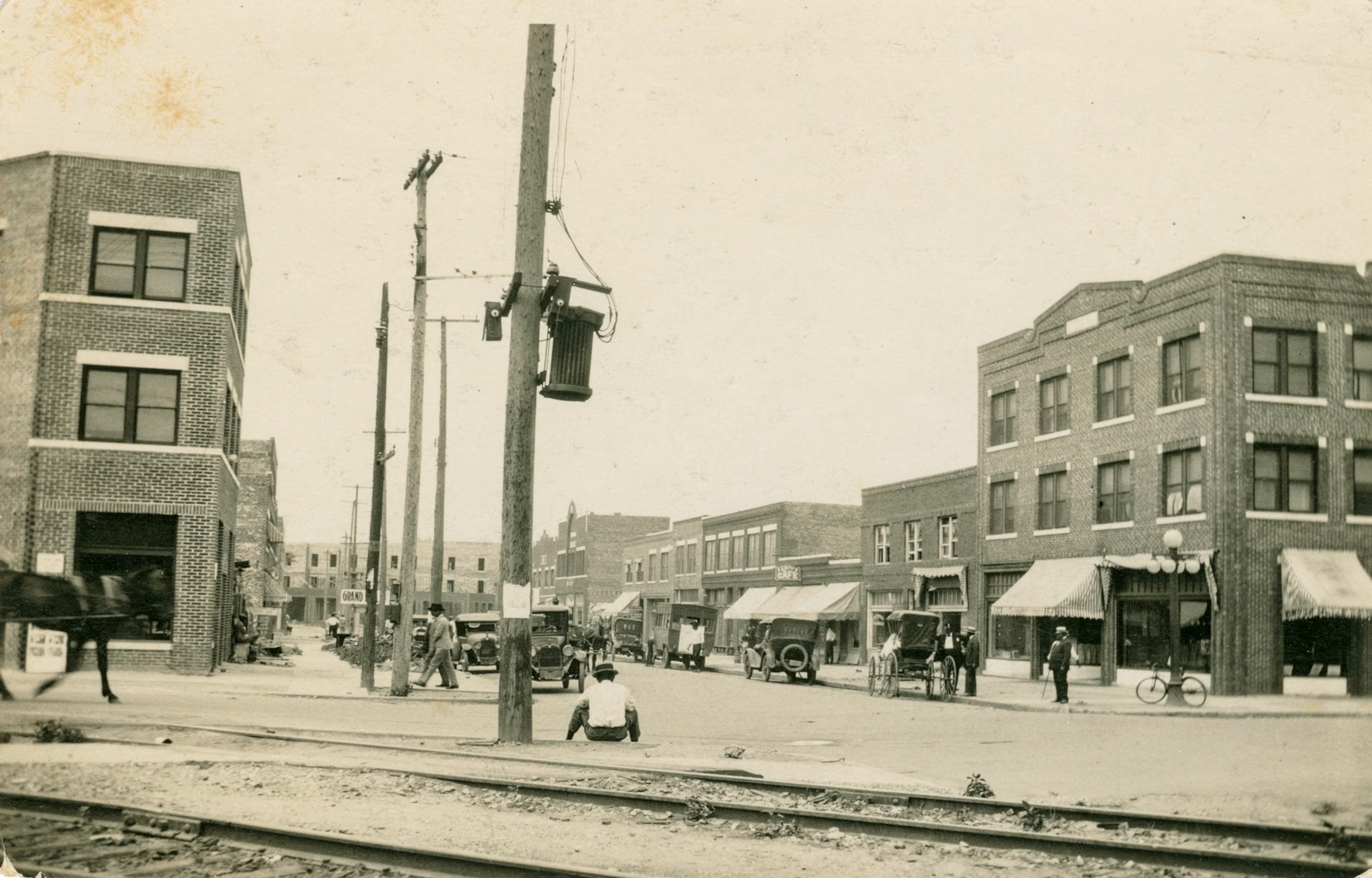
Black Wall Street Didn't End in 1921: How Greenwood Rebuilt
The Tulsa Race Massacre devastated Greenwood in 1921. Residents rebuilt homes, businesses and institutions before later highway and urban renewal projects reshaped the district again.