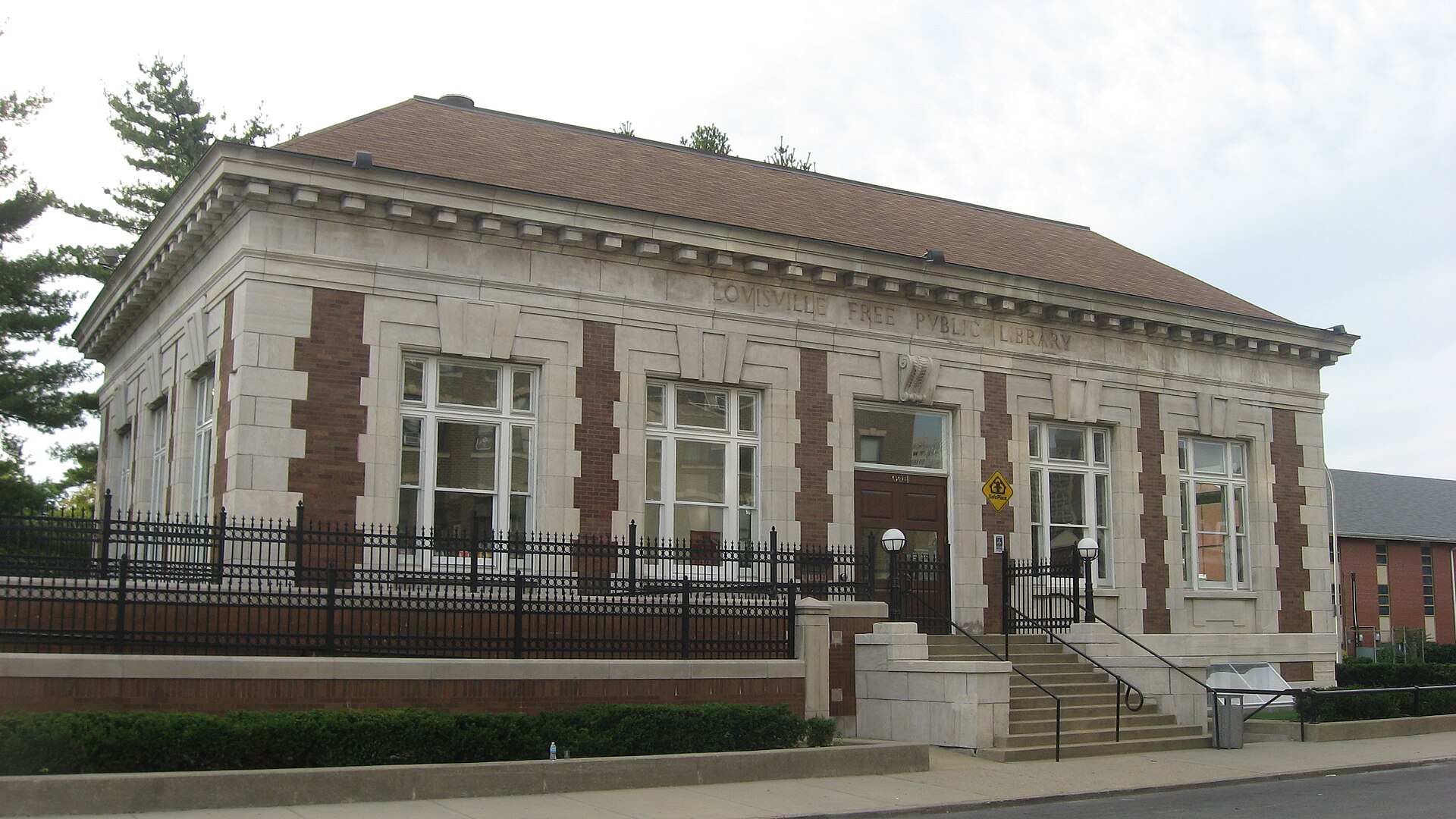
Nyttend · Original image · Public domain
The headline version is tidy: in 1908, Louisville opened a Carnegie library for its Black residents. The fuller story starts earlier, with a closed door, a school principal who refused to accept it, and a library that was already lending books out of a private house three years before its famous building existed.
The Louisville Free Public Library and the Kentucky Historical Society both describe the Western Branch as a national first. The library's own history calls it the first free public library in the nation for African Americans staffed entirely by African Americans. The state historical marker, updated in 2022, calls the 1908 building the first public library in the nation built to serve the Black community during the Jim Crow era. Those are two distinct claims, about the service and about the building, and the difference matters to how this story is told.
A door that closed
According to the library's published timeline, in 1901 Albert E. Meyzeek, principal of what was then Central Colored High School, brought a group of Black students to the Polytechnic Society Library, at the time the only central library available in Louisville. In 1902, the timeline says, the Polytechnic Society closed its doors to African Americans.
That same year, 1902 legislation created a free public library system for the city. Meyzeek organized an African American library committee and argued before the City Library Committee that Black residents should have access to the new system. The library's history describes his case as persistent and persuasive, and notes he was concerned about the lack of reference and reading material at his school. In 1903, the City Library Committee agreed to support a branch library for African Americans.
Three rooms on West Chestnut
Money for a building had been pledged by Andrew Carnegie, but construction would take time. So, according to the library, the city rented three rooms in the home of William M. Andrews at 1125 West Chestnut Street, in the heart of the predominantly Black west side. The Western Colored Branch Library opened there on September 23, 1905. The house is no longer standing. The library's history records a sign above the door that read: Knowledge is power.
This is the detail most often blurred. Service began in 1905, in a residence. The purpose-built Carnegie library came later. Construction began on March 13, 1907, and on October 29, 1908, the new building at Tenth and Chestnut was dedicated for public use. The library's timeline says more than 400 people attended the ceremony and toured the building.
The librarian who trained a generation
The branch was led by the Rev. Thomas Fountain Blue, a Virginia native whom the library credits as the nation's first African American to head a public library. Library sources date his appointment to September 1905, when the branch opened in its temporary rooms.
Blue built more than a reading room. With Rachel D. Harris supervising a Children's Department, the library developed story hours, reading clubs and debate programs, according to its history. The Douglass Debating Club for high school boys formed in 1909, with weekly meetings at the branch and an annual public prize debate. The poet and educator Joseph S. Cotter Sr. sponsored a yearly children's storytelling contest.
Blue's longest reach came through training. He created an apprentice class for people entering library work. The library's timeline records that in 1913 seven women apprenticed at the branch, three from Louisville and one each from Houston, Cincinnati, Memphis and Evansville. Library sources credit the program with helping lead to the establishment of the Hampton Library School in Virginia, and the state marker calls it a model for libraries in the South.
More than a building
The branch grew into a civic anchor. In 1914, Blue opened a second Carnegie branch for Black residents in eastern Louisville. In 1919 the library created a Colored Department under his supervision, and in February 1920 the Louisville Urban League organized at the Western branch, according to the library's timeline. Blue served the library system from 1905 until his death in 1935.
It is worth holding two truths at once. The Western Branch existed because segregation shut Black readers out of shared public institutions. It also became something its community shaped and claimed as its own, a place for children, debaters, apprentices and organizers.
Where to start
The Western Library still operates at 604 South Tenth Street. After a major renovation, it added an African American Archives Reading Room that houses the papers of Thomas F. Blue and of Joseph S. Cotter Sr. and his son. Blue's papers have also been digitized through the Kentucky Digital Library. The library's online exhibit, A Separate Flame, collects much of the history summarized here, and the branch is part of the Kentucky African American Heritage Trail.
Sources
- [1]Louisville Free Public Library, Western branch history — Louisville Free Public Library
Supports: Supports: 1902 Meyzeek advocacy; first library staffed entirely by African Americans (LFPL claim); 1908 building; Blue leadership; archives reading room; 604 S Tenth.
Verified by our desk · accessed Oct 28, 2026
- [2]Louisville Free Public Library, African American collection — Louisville Free Public Library
Supports: Background on LFPL African American archives; no specific article claim rests on it alone.
Verified by our desk · accessed Oct 28, 2026
- [3]Kentucky Historical Society, Marker 1545 — Kentucky Historical Society
Supports: Supports: Oct 1908 Carnegie building first built for Black community in Jim Crow era (marker claim); 1905 Andrews residence; Blue 1866-1935, apprentice program model. Reverse text dates Blue to 1908 (conflict).
Verified by our desk · accessed Oct 28, 2026
- [4]Louisville Free Public Library, A Separate Flame — Louisville Free Public Library
Supports: Supports timeline 1901-1920, Andrews home rooms, sign, 1907/1908 dates, 400 attendees, Harris, Douglass club, apprentices, Hampton Library School, Colored Dept, Urban League.
Verified by our desk · accessed Oct 28, 2026
More from Culture
The Sisters Who Organized Black Louisville Before the Vote
Georgia and Alice Nugent helped turn a Louisville home into a meeting place for Black women's organizing, education and voting rights. Their work expanded far beyond one address.

Louisville early voting starts Oct. 29: Find a location near you
Jefferson County voters can cast a ballot October 29–31 at any designated early voting center. Here's when the sites open, where to start looking and what to check before you go.
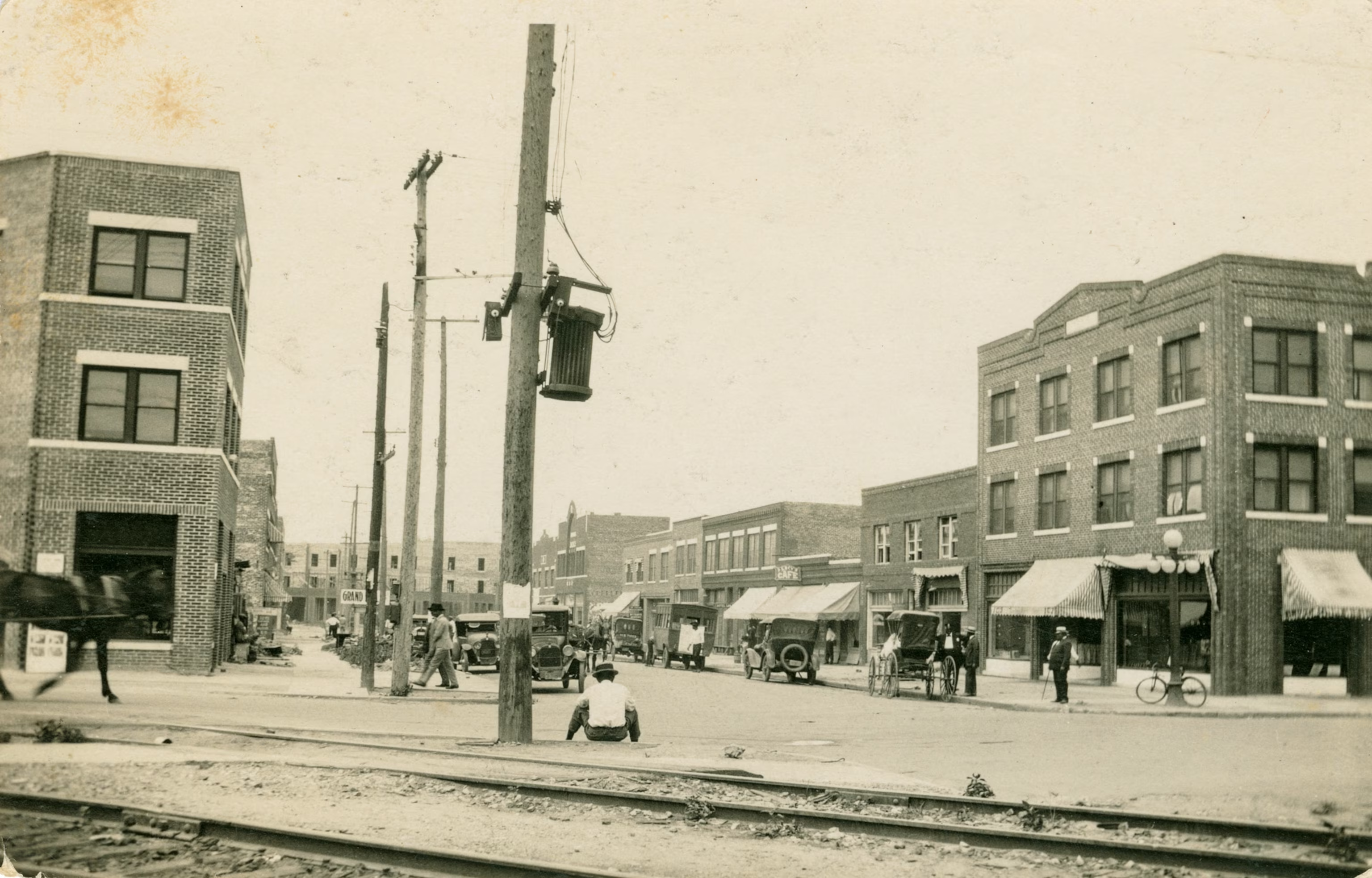
Black Wall Street Didn't End in 1921: How Greenwood Rebuilt
The Tulsa Race Massacre devastated Greenwood in 1921. Residents rebuilt homes, businesses and institutions before later highway and urban renewal projects reshaped the district again.